
Showing posts with label hip dysplasia. Show all posts

Beagle

Beagle's are small to medium sized dogs. Which are my favorite kind of canine. Big dogs can be harder to handle and can cost a lot more to maintain and feed.
Beagles have been around for what is said to be over 2,000 years but the more modern breed, came from Britain around the 1830's including the Talbot Hound,the North Country Beagle,the Southern Hound and possibly the Harrier.
Beagles are intelligent, but as a result of being bred for the long chase are single-minded and determined, which can make them hard to train. They are generally obedient but can be difficult to recall once they have picked up a scent and are easily distracted by smells around them. They do not generally feature in obedience trials; while they are alert, respond well to food-reward training, and are eager to please, they are easily bored or distracted.
Although Beagles are bred for hunting, Beagles are versatile and are nowadays employed for various other roles in detection, therapy, and as family pets as well.
Beagles are used as sniffer dogs for termite detection in Australia and have been mentioned as possible candidates for drug and explosive detection.
Because of their gentle nature and unimposing build, they are also frequently used in pet therapy visiting the sick and elderly in hospitals. In June 2006, a trained Beagle assistance dog was credited with saving the life of its owner after using his owner's mobile phone to dial an emergency number! In the aftermath of the 2010 Haiti Earthquake a Beagle search and rescue dog with a Colombian rescue squad was credited with locating the owner of the Hotel Montana who was subsequently rescued after spending 100 hours buried in the rubble.
Beagles have an expectancy of 12-15 years which is typical for a dog it's size.
Regulate what you feed a Beagle for it will eat as much as it can handle and can cause health problems and become overweight.
Beagles may be prone to epilepsy(which can be controlled with the right meds), Hypothyroidism, hip dysplasia, immune mediated polygenic arthritis(which can be fixed with steroids).
Their long floppy ears can mean that the inner ear does not receive a substantial air flow and the moist air may become trapped. This can lead to ear infections for other dogs with the same long floppy ears. Beagles may also be affected by a range of eye problems; two common ophthalmic conditions in Beagles are glaucoma and corneal dystrophy. "Cherry eye", a prolapse of the gland of the third eyelid and distichiasis, a condition in which eyelashes grow into the eye causing irritation, sometimes exist; both these conditions can be corrected with surgery. They can suffer from several types of retinal atrophy. Failure of the nasolacrimal drainage system can cause dry eye or leakage of tears onto the face.
Beagles may exhibit a behavior known as reverse sneezing, in which they sound as if they are choking or gasping for breath, but are actually drawing air in through the mouth and nose. The exact cause of this behavior is not known, but it is not harmful to the dog.
The Beagle has an even temper and gentle disposition. Described in several breed standards as being "merry", they are amiable and generally neither aggressive nor timid. They enjoy company, and although they may initially be standoffish with strangers, they are easily won over.
Beagles are excellent with children and this is one of the reasons they have become popular family pets, but they are pack animals, and can be prone to separation anxiety.
Alongside the Bloodhound, the Beagle has one of the best developed senses of smell compared to any dog. In the 1950s, John Paul Scott and John Fuller began a 13 year study into canine behavior. As part of this research, they tested the scenting abilities of various breeds by putting a mouse in a 1-acre (4,000 m2) field and timing how long it took the dogs to find it. The Beagles found it in less than a minute, while Fox Terriers took 15 minutes and Scottish Terriers failed to find it at all. Beagles are better at ground-scenting (following a trail on the ground) than they are at air-scenting, and for this reason they have been excluded from most mountain rescue teams in favor of collies, which use sight in addition to air-scenting and are more biddable. The long ears and large lips of the Beagle probably assist in trapping the scents close to the nose.

Boxer

By both the public and the veterinary associations, cropping of the ears and docking of the tail is prohibited in many countries around the world. It's like getting your cat declawed or having them neutered or spayed. Unlike the late Bob Barker which was famous for his saying on the show The Price Is Right "Help control the pet population. Have your pets spayed or neutered". I don't believe in this practice. Unless it is absolutely necessary. Just my feelings on the whole issue.
The Boxer typically is a short-haired breed, with a shiny, smooth coat that lies tight to the body.
They have broad short skulls and their most distinctive feature is their head. With a square muzzle which is in perfect proportion to the skull. Folds are always present from the root of the nose running downwards on both sides of the muzzle, and the tip of the nose should lie somewhat higher than the root of the muzzle. The lower jaw of a Boxer should protrude beyond the upper jaw and bend slightly upwards in what is commonly called an underbite or undershot bite.
The name Boxer is said to be derived from the breed's tendency to play by standing on its hind legs and mimicking a boxing motion with their front paws.
Health issues include cancer,heart conditions,Arrhythmogenic Right Ventricular Cardiomyopathy (Boxer Cardiomyopathy),hip displasia,degenerative myelopathy,epilepsy,gastric dilatation,torsion,intestinal problems. Boxers also get allergies which could be caused by a bad diet.
Entropian is another problem that faces Boxers which is a malformation of the eyelid requiring surgical correction, can be occasionally seen, and some lines have a tendency toward spondylosis deformans, a fusing of the spine or dystocia.
It is said to be a bad idea to exercise Boxers too much when they are younger. It may cause damage to growing bones. Although it is important to keep them in shape, just don't over do it.
Because of their brachycephalic head, they do not do well in certain conditions where there is intense heat or humidity. It is not recomended to exercise in these conditions.

Pembroke Corgi

Originating in Pembrokeshire Wales.
The Pembroke Welsh Corgi is one of two breeds known as the Welsh Corgis.
As far back as the 10th century, corgis were originally bred for herding sheep, bulls, horses and cattle and are the oldest herding breed. The Pembroke when bred correctly have proven themselves to be excellent companions. They are good watchdogs because of their alertness and their tendency to bark. Pembroke's are typically outgoing, friendly dogs that can be good with children as well.
Pembroke's vary in the colors of red, sable, fawn, or even tricolor. Which tricolor is considered black and tan with white makings by the AFC(American Kennel Club).
Low down to the ground they range anywhere from 10 to 12 inches(25 to 30 cm). 12 to 15 inches in length(30 to 38 cm). Weighing about 27 pounds(12 kg) in their peak condition. Females weighing about 5 pounds less than the males normally.
Their undercoat sheds continuously all year round, with extensive seasonal shedding occurring at least twice each year. There can also be extensive shedding of coat in females after the weaning of pups, after a heat, or when a female is spayed.
Popular belief is the volume of shedding fur can be significantly reduced by feeding it quality food and make sure to brush the dog regularly.
Due to the length of it's spine the Pembrokes tend to have arthritis early on in it's life, it especially happens to the ones that are overweight.
Usually are very easy to train. Be careful though, they tend to become overweight easily if not taken care of properly. Feeding and exercising correctly will keep this particular dog in tip top shape.
Ranked #11 In The Intelligence of Dogs and considered to be very good work dogs.
Favored by British royalty for more than seventy years.
Pembroke Welsh Corgis are famed for being the preferred breed of Her Majesty Queen Elizabeth The II.
Typically the Pembroke lives anywhere from 12 to 14 years and possibly longer.
Corgis are at risk of developing a disease called degenerative myelopathy or DM. Research regarding DM is underway, and a test for DM has been developed and is available through the Orthopedic Foundation for Animals. Don't worry though it is not contagious but it may be passed down to the next generation genetically. There is a free test for dogs over age 10 on the OFA site.
Like most dogs it has the possibility of getting hip dysplasia. It could also have eye disorders,clotting disorder.

Greyhound

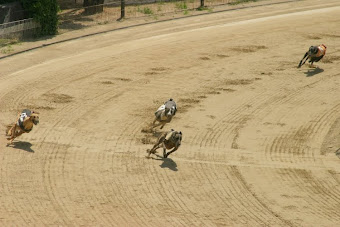
Greyhounds are known for their speed and agility hence the greyhound bus Co. They are excellent race dogs. They are also good at hunting, sighting, and being watchdogs. Flexible spines that are curved with long sleek bodies. They have dark eyes and small ears that fold back. Greyhounds can run as fast as 40-45 (70 km) miles per hour! They have smooth coats that vary in colors black, white, gray, red, fawn, fallow, brindle, and blue. Short fine coats that are easy to groom combing at least once a week. Rub down it's coat with a chamois cloth to give it an added gleam. Their skin is very sensitive and tears easily so you may want to check with your veterinarian before using flea-killing products on your pet.

Greyhounds are gentle, sensitive, loyal, and brave animals. Great with children and are very obedient. When in public places it's probably a good idea to keep your greyhound on a leash for they are usually tempted to chase things. Easy to train but you do not have to be firm with the greyhound for it to learn. A gentle approach is the best way.
The best way to feed the greyhound is two small meals a day, rather than one very large meal.
Greyhounds are usually prone to bloating and are sensitive to drugs and insecticides.
They may also be allergic to certain anesthetics. Greyhounds are one of the few breeds that typically do not suffer from hip dysplasia. The life expectancy is usually about 10-12 years.
This breed most likely descended from the Middle East or Europe and was noted as an excellent hunting dog.
Related Posts with Thumbnails